Since I already have a portfolio website with hosting and a logo http://digovial.com/ I was tasked with creating another interactive media piece. The format I ended up going with was a single page net art piece that hosts a plethora of videos I have made that can be played in any order or at the same time. Allowing the viewer to see my collection of video art all in one place, on one page, ready to be played, differs from the conventional method of just seeing a single video, watching it, then moving on to the next one. By presenting it this way my video collection becomes like an open book presenting its contents to the world.
Here is a link to the finished web page!
Tuesday, December 15, 2015


Designers and Web Designs as Inspiration for Project 4
While thinking about and starting project 4, which for me was the Net Art web page, I used various net art and artists as inspiration. Unfortunately I cannot remember the names of each artist, but there was net art that involved a grid that has been continuously computing data combinations for 20+ years, as well as an interactive website where something unexpected happens each time you click. My project kind of mirrors these examples in that it is a both a representation of data -my videos- and an interactive webpage where you can play the videos in any order.
Fire a Gun (Completed Project 3 Response)
Project 3 was a lot of fun to work on. I had a couple ideas right away when we were brainstorming our projects, and this finished product is the result of one of them and I am glad I chose it. The initial idea wasn't perfect of course, so I am thankful for the feedback to refine and expand the idea.
The finished product is a video mash up of several video games, news reports, vloggers, gun handling experts, and a psychiatrist. I then took this footage, which all together was over an hour, and cut out individual clips to use how I please to build my on message. When cutting up the video game footage it really felt like mincing vegetables. Instead of selecting the clips and removing them from the full video, I started at the beginning and, from left to right, began to cut away all footage except each moment when a gun was fired. The result was a vast collection of gunfire with which I could interweave the other appropriated footage.
Here is a link to the finished product.
https://www.youtube.com/watch?v=KUul3CJ_kDE
The message I intend this video to give is now definitely different from what the original footage professed. The majority of it is made up from gaming videos: videos gamers have made to showcase their video game-playing skills on the internet. The other clips are news and personal accounts concerning both video games and guns. I brought these elements together and turned them around to support my message, which is loosely as follows:
"Firing a gun in video games means constant violence, constant shooting, and zero restraint. Firing a gun in real life requires stopping violence, minimal shooting, and extreme discipline. I want this video to bring perspective to the viewer and make them consider learning useful life skills, like how to properly and safely fire a gun, and compare that with how much time they spend playing shooter video games."
The finished product is a video mash up of several video games, news reports, vloggers, gun handling experts, and a psychiatrist. I then took this footage, which all together was over an hour, and cut out individual clips to use how I please to build my on message. When cutting up the video game footage it really felt like mincing vegetables. Instead of selecting the clips and removing them from the full video, I started at the beginning and, from left to right, began to cut away all footage except each moment when a gun was fired. The result was a vast collection of gunfire with which I could interweave the other appropriated footage.
Here is a link to the finished product.
https://www.youtube.com/watch?v=KUul3CJ_kDE
The message I intend this video to give is now definitely different from what the original footage professed. The majority of it is made up from gaming videos: videos gamers have made to showcase their video game-playing skills on the internet. The other clips are news and personal accounts concerning both video games and guns. I brought these elements together and turned them around to support my message, which is loosely as follows:
"Firing a gun in video games means constant violence, constant shooting, and zero restraint. Firing a gun in real life requires stopping violence, minimal shooting, and extreme discipline. I want this video to bring perspective to the viewer and make them consider learning useful life skills, like how to properly and safely fire a gun, and compare that with how much time they spend playing shooter video games."
Sculpture Art Feature: LOTR Meets Kitty Scratchpost
I wanted to show this amazing rendition of famous movie sets that have been used for something completely different, changing the meaning, perception, and appreciation of the original works because of this new creative art piece.

Above is a replica of Bag End, the famous hobbit hole from the Lord of the Rings trilogy, and the tower of Sauron with a catnip-eye of Sauron on top. These replicas were specifically designed for cats to play with, the hobbit hole serving as a hideaway/litter-box holder, and the tower as a legitimately intricate scratching post. These items were undoubtedly built with the help of computers, printers, paint, various materials, and references to the real sets from the movie. The tower's shape was designed with foam, which was then wrapped in a tremendous amount of rope that was painted black. I think this would be a really interesting project to learn how to do.
Reading Response Web 2.0
The Tim O-Reilly website talked about Web 2.0 and compared and contrasted the difference between this Web 2.0 and Web 1.0. The description of Web 2.0 was not extremely straightforward, which leaves me a little bit confused as to all that Web 2.0 all entails. I know it encompasses technology such as most modern web features like Google search engine, double-clicking, and voice search, and the author provides visuals to explain. They reference Yahoo, Google, Ebay, and Amazon as being the web giants that survived web 1.0 to go on to be successful in Web 2.0. I thought it was really neat to learn how Yahoo started. They started as simply a portal that hosts links to thousands, then millions, of links to other websites. This seems simple now, but I am sure it was very convenient when the internet wasn't as organized of a place.
Youtube Artists
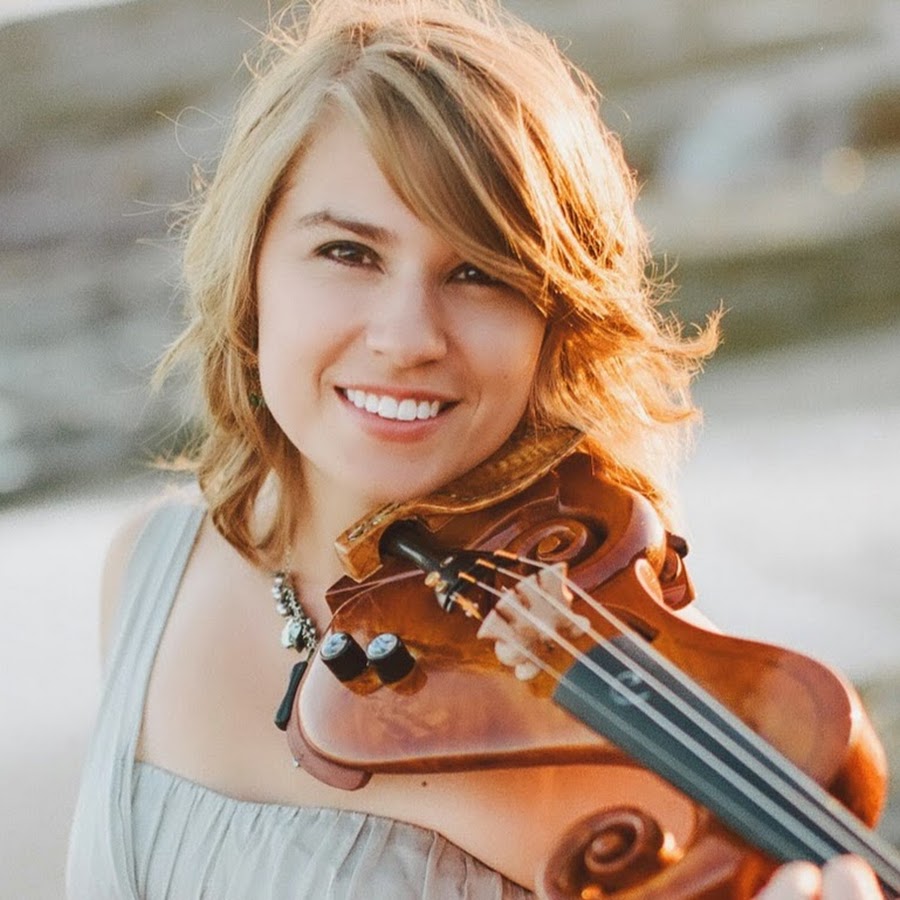
While being a possibly redundant topic,Youtube certainly cannot be ignored when it comes to artists portraying their work through video platform. Youtube has allowed everything from singing, blogging, dancing, instrumental music, sketching, and a myriad of other subjects to become career opportunities solely by using Youtube videos as the launchpad.
This artist, Taylor Davis, plays violin because it is her passion. Her other passion is video gaming. She mixed the two into a distinct career making video game soundtrack violin covers on Youtube. Because of her success as a Youtube violinist she is now starting to tour around the world so she can play live concerts for the very people who support her on Youtube, while making more fans, recognition, and most likely income.
I think we can conclude Youtube can be used to jump start just about anything. Therefore, we should always be keeping it mind as we go about our DTC lives...also Patreon, Vimeo, and others are pretty neat too if you are biased against Youtube or want to use multiple platforms.
Old + Old + Old + New
After reading Old + Old + Old = New my previous understanding of how blurry the lines between copyright infringement and fair use can be. These webpages feature discussions of copyright tendencies and what, if anything, can be done to improve or change them. It assures us that not all copyright laws are unjust, but many are, and laws need to first be broken to be fixed. They express the importance of acknowledging the author for their work when reusing art. Also, they believe in an art "ecosystem" where all past art should be available to anyone to be reused, stored, and collected. They view it as kind of a shame if art was made to be kept secret, and so they would like art to be public and shared.
Completed Project 2
Project 2, Tactical Media, was to me a perfect opportunity to pursue my interest in video since video is an increasingly popular way to get views and agendas across to enormous numbers of people. The benefits of a video for Tactical Media is that a video on a shared site can reach just about anyone, anywhere, anytime. This is a great asset have when the goal is to spread awareness, rebel against, or respond to an issue.
Tactical Media Video: https://www.youtube.com/watch?v=yu4-Td6rF1A
As far as aesthetics go I wanted an engaging, colorful, sharp theme, because for a video like this it needs to hold people's attention so they will watch to the end and receive the whole message. The message, which is to spread awareness of bad signage-roadwork around the Tri-cities, I figured could be enhanced by incorporating known themes like Mario music, Mario sound effects, and a full-fledged Bowser character who shows up to guide/pester you along. I developed this even further by writing the script to make it seem like these bad roads/signage problems are all BOWSER'S doing, and BOSWER is setting these challenges for you. Of course in real life Bowser has nothing to do with the signage in the Tri-cities, but I thought that building a figurehead for the problem would leave viewers to make the connection themselves, and perhaps realize that this problem is more tangible than they thought. Too often people just accept clear problems as part of daily life, but the aim of this video is to point out that there IS a problem and that someone IS responsible, which indicates that change CAN happen. And I tried my best to present this all in a satirical, lighthearted, and familiar way that doesn't make people upset, but effectively brings awareness to the issue
Tactical Media Video: https://www.youtube.com/watch?v=yu4-Td6rF1A
As far as aesthetics go I wanted an engaging, colorful, sharp theme, because for a video like this it needs to hold people's attention so they will watch to the end and receive the whole message. The message, which is to spread awareness of bad signage-roadwork around the Tri-cities, I figured could be enhanced by incorporating known themes like Mario music, Mario sound effects, and a full-fledged Bowser character who shows up to guide/pester you along. I developed this even further by writing the script to make it seem like these bad roads/signage problems are all BOWSER'S doing, and BOSWER is setting these challenges for you. Of course in real life Bowser has nothing to do with the signage in the Tri-cities, but I thought that building a figurehead for the problem would leave viewers to make the connection themselves, and perhaps realize that this problem is more tangible than they thought. Too often people just accept clear problems as part of daily life, but the aim of this video is to point out that there IS a problem and that someone IS responsible, which indicates that change CAN happen. And I tried my best to present this all in a satirical, lighthearted, and familiar way that doesn't make people upset, but effectively brings awareness to the issue
Reading Response Lessig 53-79
Lessig talks continues the topic of piracy and the internet on page 66, highlighting a certain technology called Napster. Napster made peer-to-peer internet sharing famous by amassing over 10 million users within nine months. After
eighteen months, there were close to 80 million registered users of the
system.". The reason it became so popular was because of the limitless possibilities involved with peer to peer sharing. This sharing is described as a function which "enables
users to make content available to any number of other users. With a
p2p system, you can share your favorite songs with your best friend—
or your 20,000 best friends"(pg 67).
Friday, October 23, 2015
Inspiration and Ideas for Project 3
For Project 3 we have been prompted to appropriate videos from Youtube under the creative commons licence, and craft our own video out of clips to convey a meaning that changes the message. For mine I had the idea come to me when I saw that there was video game footage under the creative commons category on Youtube. I like video games but I have been thinking about how many games these days are shooter-based. Usually first-person, the purpose of these games is to shoot and defeat enemies. I like the idea of playing off of this by taking away all of the game-play footage EXCEPT for the moments when the guns are firing, making a continuous barrage sequence. In the background I would play "Blow a Kiss Fire a Gun" by Major Lazer.
I am going to see if I can find video clips of real people shooting for target practice; training, focused, and serious, and have them interspersed throughout the video. Then I think it would show a new angle on guns. I am thinking of how most young men (and many women) these days play an extensive amount of shooter video games, but how many actually train with the real thing, get a gun permit, and know how to defend themselves and their families? Regardless if they ever end up needing it, this is surely a more useful skill than knowing how to shoot lasers in a video game. I don't want this video to bash video games either, I think video games are really fun and play them myself, rather, it would be a suggestion of something else people could be doing with their lives if they aren't, myself included. Those are my ideas and inspiration thus far.
I am going to see if I can find video clips of real people shooting for target practice; training, focused, and serious, and have them interspersed throughout the video. Then I think it would show a new angle on guns. I am thinking of how most young men (and many women) these days play an extensive amount of shooter video games, but how many actually train with the real thing, get a gun permit, and know how to defend themselves and their families? Regardless if they ever end up needing it, this is surely a more useful skill than knowing how to shoot lasers in a video game. I don't want this video to bash video games either, I think video games are really fun and play them myself, rather, it would be a suggestion of something else people could be doing with their lives if they aren't, myself included. Those are my ideas and inspiration thus far.
And the Projects were Many
So I thought I would make this blog post an update about the projects I'm working on.
Project 2 "Tactical Media" is in the filming process. I have done some filming, and plan on at least one more day of filming before editing. As a reminder I am gathering footage of various bad and confusing construction around the Tri-Cities, whether it be signage, dysfunctional roadways, or quality of driving experience, and am doing this in order to comment on this issue and provoke awareness. This process takes a little while because to get those shots I am literally driving from one location to another, sometimes more than once to get extra footage. To pull this off, I enlisted the help of my Mom for last shoot, who I convinced to drive two non-stop figure eights through one of the figure eight roundabouts! Thanks Mom! :)
Project 3 "Appropriation" is coming along, though I will save the details for my next post "Inspiration and Ideas for Project 3". Over the past few days I have perused the cache of Youtube videos and downloaded much footage. I have begun editing too, and am continuing to think about concepts I can incorporate to improve the project.
Project 2 "Tactical Media" is in the filming process. I have done some filming, and plan on at least one more day of filming before editing. As a reminder I am gathering footage of various bad and confusing construction around the Tri-Cities, whether it be signage, dysfunctional roadways, or quality of driving experience, and am doing this in order to comment on this issue and provoke awareness. This process takes a little while because to get those shots I am literally driving from one location to another, sometimes more than once to get extra footage. To pull this off, I enlisted the help of my Mom for last shoot, who I convinced to drive two non-stop figure eights through one of the figure eight roundabouts! Thanks Mom! :)
Project 3 "Appropriation" is coming along, though I will save the details for my next post "Inspiration and Ideas for Project 3". Over the past few days I have perused the cache of Youtube videos and downloaded much footage. I have begun editing too, and am continuing to think about concepts I can incorporate to improve the project.
Reading Response Lessig Pages 7-30
Reading Lessing’s Free Culture book pages 7-30 has
introduced me to some interesting conclusions about internet, creativity, copyright
laws, and how they affect each other.
Lessig observes that in advent of the internet “free” creativity has
been stymied to some degree because of the laws that now apply to online
artistry. “Yet the law’s response to the
Internet, when tied to changes in the technology of the Internet itself, has
massively increased the effective regulation of creativity in America. To build
upon or critique the culture around us one must ask, Oliver Twist–like, for
permission first” (Lessig, pg 10). The
dynamic of internet culture really has changed.
I found it neat that later on, on page 17, Lessig quotes Lord Mansfield
when he says “A person may use the copy by playing it, but he has no right to
rob the author of the profit, by multiplying copies and disposing of them for
his own use”. I find this quote
particularly relevant since I said very much the same thing in my last blog
post. This reading is making me think critically
about the relationship between the law and art online, and how it relates to
our project of appropriating art. Thankfully
I don’t think we will have any legal issues because we (presumably) will not be
selling our projects on the black market.
:P
Sunday, October 18, 2015
Thoughts On Appropriating Art
 |
Friday, October 16, 2015
Reading Response Chapter 10
While reading chapter 10 of Sturken and Cartwright's Practices of Looking, I found the section on satellites bringing us a totally different perspective on weather in regards to objectivity and subjectivity quite interesting. These perspectives on looking are sometimes challenging to differentiate sometimes, but I see the point being made. Weather patterns always seem a little less ambiguous when we are informed about them, and with today's satellite technology it is all made so much easier. On page 394 the authors make a interesting point: "...the aerial satellite perspective also affords us a stronger sense of the subjective experience of living down inside the conditions we observe from above", which got me thinking; I don't usually watch the news or view satellite images when storms roll around, unless it is said to be a particularly dangerous storm. Otherwise, I just enjoy the rain and the experience as per usual. Maybe it's because I am not a news buff, but I find the weather imagery uninteresting unless it is near me, and when it is I don't feel like my perspective is changed much by the above view they speak of, but that's just me. I still feel like I view storms from "below" as opposed to "above". Sure, I know what they look like from above in general, but each one is wild and different, and I feel minuscule and awed in comparison. I thought these were interesting things to think about.
My Inspiration for Project 2
I wanted to have my tactical media project make a statement about the dangerous and confusing signage and construction in the Tri-Cities, because it seems like there are an increasing number of them recently, as well as complaints about roundabouts, bumpy neglected roads, etc. My idea is to take videos of these questionable roadways and string them all together into a video that will help bring awareness to, and maybe inspire action concerning these issues Since I will be filming already existing signs, roadway lines, traffic lights, etc, I think this will definitely address the idea of essentially using existing media tactically to make a controversial point.
The video will be informative, concise, perhaps satirical to add interest, and should be at home on the news feed of someone's Facebook, YouTube, or Twitter feed, for example. The kinds of videos that inspired me to use this approach are Buzzfeed videos, which are [usually] viral videos that creatively satirize or emphasize truths from daily life. The aesthetic of these videos is a little different from what I will be using because they have a clean, bright, professional style, and I am thinking mine will look a little more casual and be shot from a first-person view, and maybe even add some shakiness to indicate confusion or fright. Those are my ideas and I am excited to begin filming.
Wednesday, September 23, 2015
Reading Response Chapter 8
Chapter 8 of Sturken & Cartwright's Practices of looking" covers the facets of post-modernistic art forms. One of these facets, simulacra & simulation described on page 305, reveals that we have "entered into a post-modern era characterized by media and technologies of simulation, we lost sigh of 'the real'." Sturken and Cartwright use the example of Beijing's World Park which contains small-scale replicas of world-wide attractions like the pyramids or Eiffel Tower that locals can visit without ever having left. I think that simulation and hyperrealistic art like this can produce amazing experiences. I do wonder how World Park affects people's desire to travel to the locations featured. Since the park is presented as a substitute for real places, does it help sate their desire to ravel to the original location? Or perhaps it stimulates popularity to travel. These are questions that came to mind as I read this section.
A relevant example could be someone staying at home to watch Netflix, rather than engaging in the real world. While it can be immensely entertaining, it can become simply a substitute to the real thing, especially when "appreciated" in excessive amounts.
A relevant example could be someone staying at home to watch Netflix, rather than engaging in the real world. While it can be immensely entertaining, it can become simply a substitute to the real thing, especially when "appreciated" in excessive amounts.
Sunday, September 20, 2015
Completed Project 1
Here is my completed project one, which is a 3-piece Adoption Ad Campaign. I decided to have unifying images between the three of these, and they are the "heartforthefatherlesslogo", and the silhouette of the family.
This is the billboard for my Adoption campaign. The sunset photograph is an original that I took. I then edited the image to remove three distracting light posts that were in front of the clouds, and removed the "Hapo" signs as they too were distracting. The Heart for the Fatherless program has a real website, which is why I included it on the Billboard. Since billboards are designed to present a short, clear message, I thought it a good compliment to provide a web address for those who want to learn more.

This is my Adoption print ad. The theme for this one was birthed via inspiration from the awesome Tri-city skies. The print ad is designed to have more information about the subject, as well as to have a clear message. I included a quote that doesn't originally belong to the Heart for the Fatherless program, but thought it extremely appropriate to enhance the positive message of adoption.

This is my Adoption web banner. The function of this guy is to be a hyperlink in and of itself, so if people want to know more, they simply need to click. I decided to stick with the family silhouette, and added it to the logo, turning down the opacity to blend it a little. The reason it is an animated GIF is so the motion of the changing faces can attract attention to the ad.

Reading Response Chapter 2
In chapter 2, Stirken and Cartwright further examine the relationship between the viewer and the art piece, than an "audience" and the art piece. They point this out as an important distinction because an individual viewer can have much more personal experience than a collective audience. According to the authors "by looking at the viewer, we can understand certain aspects of practices of looking that cannot be captured by examining the concept of the audience, an entity into which producers hope to mold viewers as consumers."
They also cover other topics like taste, and how it depends on the individual's culture, ethnicity, age, background, personal opinion, etc, and Encoding/Decoding which is the process of viewers decoding meanings that the artist has encoded into the work. I personally think the encoding/decoding process is rather fun, because artwork can vary by date made, the artist's lifestyle, the message, and various other factors. With old paintings, you can decode a bit of history within almost any piece, and some one could go to extensive depths examining.
Wednesday, September 16, 2015
Chapter 1 Reading Response
Sturken and Cartwright introduce various perspectives on how art can be perceived in chapter one. They bring the validity of photographs into question, observing that some people think any photograph is subject to the photographer's interpretation, while others believe a photograph is close enough to the actual event that it represents the event accurately. I found the example they used of the "Trolley" photograph to be extremely engaging and accurate. They say this to describe the photo: "The photograph here documents passengers on a segregated city trolley in New Orleans--a white matron looking suspicious, a white boy in his Sunday best, a black man looking mournful." It makes me immediately makes me wonder "what were these people actually thinking when this was taken?" You can look at each person in turn and guess what they ponder as they sit in their designated cubicles, but we can't really know for sure. Maybe the suspicious lady actually had a mischievous sense of humor and frowned for the picture on purpose? I know some people like that. Indeed, the interesting expressions are a big part of what makes this piece work for me as art, and in addition, this photograph is definitely factual and historical as the authors point out.


Tuesday, September 8, 2015
Inspiration for my Ad Campaign
I have chosen 'promoting adoption' as the subject of my ad campaign, and a major inspiration for me is the Heart for the Fatherless program. It is a local program that focuses on helping children to be adopted from other countries. I have friends who have used this program to adopt four children from China, and those children now live happily in a big family. I think that this is a fantastic program to bring people together, and so I am planning to incorporate Heart for the Fatherless in my campaign, or even to cater it specifically to help this program. Doing so can hopefully spread awareness of this specific adoption programs.
For Aesthetics for the billboard, I had the idea of using a photograph of a sunset behind Candy Mountain to represent the Tri-cities landscape in a positive light. Then, adding the words "Tri-cities: Adopting is Closer than You think". The goal was so that when a local viewer sees the image, they will think "hey, I know that place!" and perhaps it will get them interested, and further enforce the idea that adopting really is a closer option than they think it could be, especially if they live around that area. I also wanted to incorporate a similar unifying image in each of the three pieces, besides the "heartforthefatherless" logo, to tie them together.
For the Banner I got inspiration from web banners I've seen before on the web, where I saw faces of different people flashing in a loop. The effect drew me in because each face brings something fresh and new to the experience, and it's kind of hard to look away. I had decided to use this same effect in my banner.
For the Print ad I actually got inspiration from being outside under the clear Tri-cities sky. If there is one thing this desert city has going for it, it is the wide view we get of the clear skies in the daytime, evening, or night. I wanted to go with a nighttime theme so I could capture the splendor of nature while encouraging a positive message.
For Aesthetics for the billboard, I had the idea of using a photograph of a sunset behind Candy Mountain to represent the Tri-cities landscape in a positive light. Then, adding the words "Tri-cities: Adopting is Closer than You think". The goal was so that when a local viewer sees the image, they will think "hey, I know that place!" and perhaps it will get them interested, and further enforce the idea that adopting really is a closer option than they think it could be, especially if they live around that area. I also wanted to incorporate a similar unifying image in each of the three pieces, besides the "heartforthefatherless" logo, to tie them together.
For the Banner I got inspiration from web banners I've seen before on the web, where I saw faces of different people flashing in a loop. The effect drew me in because each face brings something fresh and new to the experience, and it's kind of hard to look away. I had decided to use this same effect in my banner.
For the Print ad I actually got inspiration from being outside under the clear Tri-cities sky. If there is one thing this desert city has going for it, it is the wide view we get of the clear skies in the daytime, evening, or night. I wanted to go with a nighttime theme so I could capture the splendor of nature while encouraging a positive message.
Reading Response Chapter 7
Chapter seven discusses how today's modern society has become a mega consumer culture, due to a variety of factors, such as easy access to transportation, mass production, and a demand for new products. On page 267 Sturken and Carwright pointed out that "the rise of online commerce since the late 1990's has dramatically reconfigured this relationship of consumerism to space". This stood out to me because I myself am an avid shopper on Amazon.com and love being able to have things shipped to my door. I think an interesting observation about consumer culture is that there are many people, like me, who really do not enjoy shopping in person, except for a few select things. For people like me, being able to use online shopping is more fun, and not mention convenient in many other ways.
Monday, August 31, 2015
Digital Identity

POL Reading Response
Chapter 6 of Practices of Looking by Sturken and Cartwright presents some highly interesting topics concerning media in our everyday lives. The section about mass media caught my attention when it talked about how the footage that captured the Kennedy assassination was sold for $16 million dollars, because the footage is, by nature, simply a record of the event and not the event itself. I find it mind-boggling that because of how we have come to rely on images and video to record history, a piece of footage can be worth millions to the right buyer. Perhaps it is because of something the authors pointed out after comparing the original footage with a re-creation "the Zapruder film image of the assassination cannot be separated from the event itself, indeed that image is, in essence, the event." (Sturken, Cartwright, pg 229) Going along with this, I wonder what would have transpired if the original footage had never existed, yet they had still made the reenactment video in 1975 based on people's descriptions of the event and shot at the same location? Would the reenactment video have garnered such value over time? Having actual footage is best of course, but I wonder if the reenactment would have gained more sentimental and historical value because it is an accurate interpretation of the event, or if it would have remained obsolete because it wasn't actual footage of the even
I point this out because the film industry, as a prominent branch of mass media, does reenactments all the time and some are extremely detailed and accurate, while others are loose interpretations made to fit a genre better. With all of the amazing resources television has these days like elaborate sets, CGI, and talented actors and actresses, I think there is something to be said for authenticity as opposed to props and polish. My personal experience has been that when I see real original footage of some place, event, or person, I appreciate it greatly, and it adds that much more to my viewing experience. That being said, I think a reenactment of the Kennedy Assassination at the original location with actors might have actually become somewhat of a valuable piece of historical footage should the firsthand footage not have existed. However, investigating this topic more deeply has helped me better understand why the value of the original went up so insanely high over time. You can't get more original than primary source material, and while this particular footage is of a grim event, it is more valuable to historians and investigators to watch what happened with complete accurateness. In other films, even fiction-based ones, content almost always seems more appreciated and masterful the more genuine and original it is.
I point this out because the film industry, as a prominent branch of mass media, does reenactments all the time and some are extremely detailed and accurate, while others are loose interpretations made to fit a genre better. With all of the amazing resources television has these days like elaborate sets, CGI, and talented actors and actresses, I think there is something to be said for authenticity as opposed to props and polish. My personal experience has been that when I see real original footage of some place, event, or person, I appreciate it greatly, and it adds that much more to my viewing experience. That being said, I think a reenactment of the Kennedy Assassination at the original location with actors might have actually become somewhat of a valuable piece of historical footage should the firsthand footage not have existed. However, investigating this topic more deeply has helped me better understand why the value of the original went up so insanely high over time. You can't get more original than primary source material, and while this particular footage is of a grim event, it is more valuable to historians and investigators to watch what happened with complete accurateness. In other films, even fiction-based ones, content almost always seems more appreciated and masterful the more genuine and original it is.
Subscribe to:
Posts (Atom)